
Catch a falling star and put it in your pocket
Never let it fade away
Catch a falling star and put it in your pocket
Save it for a rainy day
—”Catch a Falling Star” • pop song by Paul Vance and Lee Pockriss • made famous by Perry Como 1957 • the first single to receive a Recording Industry Association of America gold record certification, on March 14, 1958 • Como’s last number one hit in the United States
SpaceX and the long arc to reliable space travel
As the end-of-year holidays near—with commercial air travel expected close to historic highs—it isn’t just festive sugar plums¹ dancing in hopeful heads. For some, it’s spaceliner dreams.
Still, it’s a long arc to reliable spaceflight—an unglamorous grind toward building “jumbo jets” to space and back.
Space headlines love the spectacle: a roaring liftoff or a skyscraper-sized rocket plucked out of mid-air by mechanical “chopsticks.” What rarely makes the front page is why such extraordinary choreography is necessary in the first place. Unlike commercial airliners—which glide onto forgiving, two-mile concrete runways—chemical rockets operate on the razor’s edge of physics. Every kilogram of wings, landing gear, or backup abort hardware steals directly from payload capacity. To save mass, engineers trade away aviation-style safety margins for razor-thin tolerances: a legless metal cylinder hovering on a column of fire, aligned to the millimeter so two protruding pins can rest on closing steel rails.
That engineering reality puts a wide gulf between today’s viral test flights and tomorrow’s holiday boarding passes. For the foreseeable future, astronauts won’t ride inside a chopstick-caught ship—and commercial passengers won’t stroll down a jetbridge with standard airline consumer protections. Instead, turning an experimental heavy-lift vehicle into a “boringly safe” spaceliner means surviving hundreds of uncrewed flights, resolving fierce safety debates over single-point failures, and replacing “informed consent” death waivers with true aviation-grade reliability.
History suggests we may even be looking at an evolutionary bridge rather than the final destination. Complex technologies rarely scale smoothly from bulky prototypes to effortless consumer tools; more often, they hit a wall. Think of room-sized mainframe tape drives shrinking through washing-machine-sized disk drives down to a microchip—or intricate, piston-driven propeller airliners giving way to the relative simplicity of the jet engine. The Space Shuttle eventually went extinct under the weight of its own maintenance complexity. Today’s reusable chemical heavy-lifters—marvels of brute-force precision—might face a similar ceiling until new propulsion or materials relax the brutal math of Earth’s gravity.
Until then, visions of orbital hotels remain a festive daydream—inspiring to watch, thrilling to engineer, and still a long way from an ordinary holiday itinerary.
Notes
[1] An idiom for sweet holiday daydreams, popularized by Clement Clarke Moore’s 1823 poem “A Visit from St. Nicholas” (“‘Twas the Night Before Christmas”). Historically, a sugar plum wasn’t a fruit, but a small, round hard candy—typically a seed or nut coated in slow-built layers of hardened sugar—that served as an expensive seasonal indulgence. It’s a fitting echo for today: amid stubborn consumer prices and tight household budgets, even modest holiday treats can feel like rare luxuries—long before anyone starts pricing out a ticket to orbit.
[2] YouTube > VideoFromSpace > Wow! SpaceX Starship’s Historic Tower Catch in Super Slow Motion — 4 Camera Angles (posted November 18, 2026)
Description: Watch SpaceX’s historic Starship Flight 15 tower catch in super slow motion from four different tower-mounted camera angles! The footage captures Ship 42’s final descent and the moment Starbase’s giant mechanical arms, nicknamed “chopsticks,” successfully grabbed the spacecraft on Nov. 14, 2026. • The first-ever tower catch of a Starship upper stage marks a major milestone in SpaceX’s development of a fully and rapidly reusable launch system. • Credit: SpaceX | edited by Space.com
Technology context (by Nobody)
spacex chopsticks capture of starship upper stage: how does the capture avoid damaging the vehicle?
The Mechazilla “chopstick” arms avoid damaging the Starship upper stage by engaging reinforced structural catch points rather than the thin hull or heat shield, matching the vehicle’s descent motion, and aborting the catch if alignment or conditions fall outside safe limits. [1, 2, 3, 4]
Structural & Thermal Protection
- Dedicated Catch Interfaces: The arms contact reinforced structural points designed to transfer concentrated capture loads into the broader frame without deforming the surrounding skin.
- Tension Over Compression: Suspending the vehicle from upper catch points relies on the steel structure’s strength under tension and avoids heavy landing-leg reinforcement at the base.
- Heat Shield & Exhaust Clearance: Catching the vehicle in mid-air keeps the engines clear of ground debris and acoustic reflection, while positioning the catch points away from vulnerable thermal protection tiles helps limit heat shield scraping during engagement. [1, 2, 3, 4, 5, 6]
Motion Control & Abort Safeguards
- Matched Descent & Hover: The upper stage slows its descent and hovers near the tower so the arms can close smoothly under the catch points rather than slamming into a fast-moving vehicle.
- Tower Stiffness & Alignment Tolerance: The launch tower and arms are built to stay stiff under dynamic loads and tolerate minor alignment variations without creating sharp force spikes.
- Abort Envelope: Guidance and control systems monitor winds, vehicle state, and alignment; if conditions fall outside safe limits, the system can call off the catch rather than force an unsafe grab.[1, 2, 3]
Would you like to look closer at Ship 42’s Flight 15 catch, heat shield tile wear, or how upper-stage catch points differ from Super Heavy booster catch points
Here is slow-motion footage from the tower cameras showing how Mechazilla’s arms close in on Ship 42 during the Flight 15 catch:
Wow! SpaceX Starship’s Historic Tower Catch in Super Slow Motion
YouTube · VideoFromSpace
Would you like to explore how the tower’s carriage and arms absorb the impact, why Super Heavy’s Flight 15 catch was aborted, or SpaceX’s plans for its next double-catch attempt?
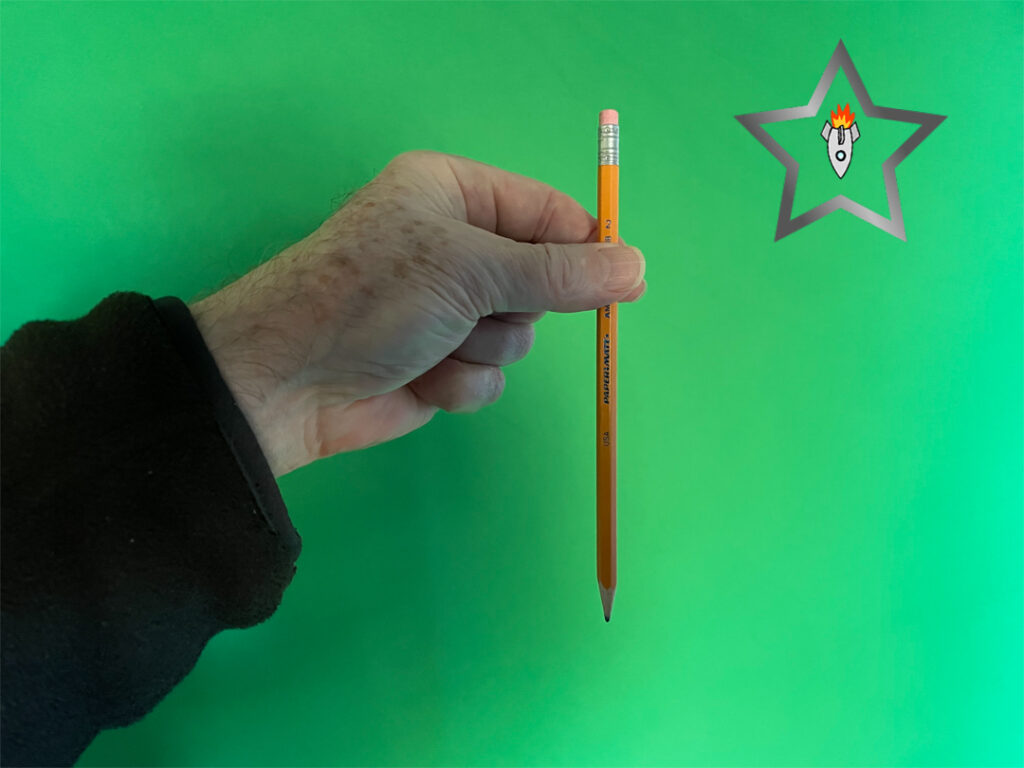
so, mechazilla’s arms hold on the vehicle is only by friction, or are there groves or catch protrusions which interlock for load bearing rather than just compression forces? is this like dropping a pencil between thumb and forefinger or do my fingers and pencil mate in some way?
They physically mate and bear weight on protruding catch hardware—not friction alone. If Mechazilla relied on pinching the cylinder like a pencil between your thumb and forefinger, the inward squeezing force needed to stop a ~100-ton rocket from slipping would crush its thin stainless-steel propellant tanks.
Instead, the catch works like catching a pencil by a pair of tiny T-bar pegs sticking out from its sides, resting those pegs directly on top of two horizontal rails:
1. Protruding Catch Pins on the Rocket
- Dedicated Load Points: Both the Super Heavy booster (just below the grid fins) and the Starship upper stage (near the forward section) have reinforced catch pins / fittings protruding outward from opposite sides of the hull.
- Vertical Weight Transfer: The rocket’s weight rests downward on top of the arms through these protrusions, so gravity is supported by direct vertical bearing rather than sideways clamping pressure.
2. Rails & Cushioning on the Chopsticks
- Landing Rails: The inner top edges of Mechazilla’s two arms feature smooth landing rails that slide underneath the rocket’s catch pins as the arms swing shut. [1]
- Controlled Sliding & Shock Absorption: Because the pins rest on top of the rails rather than locking into tight, rigid sockets, the rocket can settle slightly, slide, or damp out minor horizontal and rotational motion without jamming or bending the hull. [1, 2, 3]
- Stabilizing Contact: While the arms hug close enough to keep the vehicle centered and prevent it from tipping out, the primary support is the vertical shelf formed between the protruding pins and the rails underneath them. [1]
Would you like to see how the upper stage’s catch pins are protected from reentry heat, or how the tower’s hydraulic carriage cushions the vertical drop once the pins touch the rails?
so, the pins are positioned only on two sides of the cylinder (not a 360 degree protruding ring), which means that cylinder orientation (rotational alignment) is critical and not merely centering in the grabber arms?
Yes—rotational alignment (roll orientation) is critical because the catch pins are mounted only on two opposite sides of the hull rather than a 360-degree ring.
Why SpaceX Uses Two Pins Instead of a Ring
- Mass & Aerodynamics: A full 360-degree structural ring around a 9-meter (30-foot) diameter rocket would add massive dead weight and create huge aerodynamic drag and heating during ascent and reentry.
- Heat Shield & Flap Clearance (Upper Stage): The Starship upper stage has thermal tiles on its belly and four large aerodynamic flaps; placing two discrete catch points on the sides keeps them clear of the windward heat shield and flap hinges.
How the Rocket Controls Its Roll Alignment
Because the rocket cannot simply drop in at any random rotation, its flight computer actively controls rollall the way into the tower:
- On Super Heavy (Booster): The four hypersonic grid fins steer the booster in pitch, yaw, and roll through the atmosphere, and gimbaled Raptor engines maintain exact rotational alignment during the final hover burn.
- On Starship (Upper Stage): The four body flaps control roll during atmospheric belly-flop descent, and gimbaled Raptor engines plus cold-gas thrusters fine-tune the roll angle after the flip maneuver so the two pins line up parallel to the chopstick arms.
- Built-In Forgiveness: While roll must be accurate, the chopsticks are long horizontal rails—so the vehicle has a generous margin for forward/backward drift along the length of the arms even if it isn’t dead-center in the gap.
Would you like to look at how the booster and upper stage handle crosswinds during that final alignment, or what happens to the vehicle’s roll if an engine out occurs right before catch?
how is the grabber-hull catch point (rotational) alignment monitored—optics,, sensors, lidar, …
The alignment between the rocket’s catch pins and Mechazilla’s chopstick arms is monitored using multi-sensor fusion—combining inertial navigation, differential GPS, optical cameras, LiDAR, and radar rangefinders across both the rocket and the tower. [1, 2, 3]
Because standard GPS is only accurate to a few meters, the system transitions through distinct sensing layers during the final approach: [1]
1. Approach & Coarse Attitude (IMUs + Differential GPS)
- Inertial Measurement Units (IMUs): High-frequency gyroscopes and accelerometers inside the rocket continuously track its exact pitch, yaw, and roll angle in 3D space.
- Differential / RTK GPS: Ground reference stations at Starbase transmit correction signals to the vehicle, narrowing its position relative to the tower down to centimeter-level accuracy before it even enters the arms. [1]
- Continuous Telemetry Link: The rocket broadcasts its live attitude, velocity, and position data directly to receivers on the launch tower so the arms know where the vehicle is and how it is oriented.[1]
2. Terminal Precision (Radar, LiDAR & Optical Cameras)
In the final seconds as the rocket hovers between the chopsticks, the system relies on direct relative measurements rather than global coordinates: [1]
- Radar Rangefinders: Radar sensors mounted along the inner catch rails measure the exact distance and closing speed to the rocket’s stainless-steel hull as it enters the gap. [1, 2]
- Optical Cameras & LiDAR: High-resolution cameras and laser-based LiDAR sensors on the tower and vehicle track physical reference features—such as the catch pins, grid fins, and chopstick rails—down to the millimeter. [1, 2, 3]
- Independent Arm Positioning: Because the two chopstick arms move independently, the tower’s control system uses this live sensor data to adjust each arm’s closing angle and speed to match the rocket’s exact position and roll orientation just before contact. [1]
Would you like to know how fast the chopsticks have to close once alignment is confirmed, or how the tower’s hydraulic and cable systems cushion the load after the catch?
wow, this capture system is quite complex, not just the choreography, with critical margins and yet to be demonstrated reliability; i assume that for manned flight, returns will be empty of passengers?
Your intuition is spot-on for the near term—early human missions will not return to Earth inside a chopstick-caught Starship, though SpaceX’s long-term goal is eventually to catch crewed Starships once the system proves aircraft-like reliability.
1. Near-Term Crewed Missions: No Earth Catch for Astronauts
For NASA’s Artemis lunar missions (such as Artemis IV, targeted for 2028), astronauts do not launch or return to Earth on Starship at all: [1]
- Earth Launch & Return on Orion: Crew launch aboard NASA’s SLS rocket in the Orion capsule, transfer to a waiting Starship HLS (Human Landing System) in lunar orbit to land on the Moon (using traditional landing legs), and return to Orion for an ocean splashdown on Earth.
- Why No Earth Catch Yet: Starship lacks a traditional launch escape system, and the tower catch has only been demonstrated once on an upper stage (Ship 42 on Flight 15). Additionally, if a catch is aborted—as happened with Flight 15’s Super Heavy booster—the default fallback for an uncrewed vehicle is an offshore water splashdown that destroys the rocket. [1, 2, 3]
2. SpaceX’s Long-Term Plan: Catching Crewed Ships
SpaceX still intends to carry people from Earth to Mars—and eventually point-to-point on Earth—by catching crewed Starships with Mechazilla, based on three key pillars:
- No Backup Legs on Earth Ships: Adding heavy, heat-shielded landing legs strong enough for Earth gravity eats directly into payload capacity. SpaceX plans to build reliability through hundreds of uncrewed Starlink, tanker, and cargo flights before putting humans aboard for a tower catch.
[1, 2] - Redundant Systems & Engine-Out Capability: Unlike early prototypes, operational crew Starships are designed to tolerate an engine failure during the final landing burn and still hover into the arms.
- The “No-Leg” Safety Debate: Aerospace engineers and spaceflight observers often point out the fundamental trade-off: eliminating landing legs saves crucial mass, but it removes the option to safely touch down on flat ground or a barge if the tower has an issue, making extreme flight-proven reliability a strict prerequisite before crewed returns. [1]
Would you like to look at how the Moon/Mars version of Starship lands without a tower, or how SpaceX plans to rack up hundreds of uncrewed test flights before certifying Starship for crew?
hmm, the ongoing safety debate will be interesting; yet, the notion of “jumbo passenger jets” being grabbed at landing seems a reach—the tradeoffs of developing a trusted heavy lift system.
That comparison captures the core tension in modern spaceflight: building an airliner-reliable heavy-lift vehicle using a recovery method with almost zero margin for mechanical error.
1. Why Rockets Can’t Land Like Jumbo Jets
Airliners rely on wings and runways—passive aerodynamic lift and long concrete strips that gracefully forgive minor variations in speed, wind, or engine performance. Rockets face a very different physics problem:
- No Wings for Slow Flight: A vertical-landing orbital booster or ship is essentially an empty, unstable metal cylinder balancing on a column of fire.
- The “Rocket Equation” Penalty: Every kilogram of landing gear, wings, or backup abort hardware added to the upper stage directly subtracts from the payload it can carry to orbit—and requires drastically more fuel at liftoff to push that extra weight out of Earth’s gravity well.
2. Where the “Jumbo Jet” Analogy Breaks Down—and Where It Holds
Critics and aerospace safety engineers often highlight the sharp contrast between aviation safety standards and a legless tower catch:
| Dimension | Commercial Airliner | Chopstick-Caught Starship |
| Landing Infrastructure | Passive runway (thousands of feet of margin) | Active mechanical tower (arms must close at the exact second) |
| Single-Point Failures | Can glide or land with engine/hydraulic failures | Must have working engines, gimbals, and functional tower arms |
| Abort / Diversion Options | Can go around and fly to a nearby airport | If the tower fails or weather shifts, a legless ship has nowhere safe to land |
SpaceX’s counterargument is flight rate: commercial airliners only became extraordinarily safe because thousands of flights per day exposed and eliminated every rare failure mode. By turning Starship into an uncrewed workhorse for Starlink deployment and orbital refueling first, SpaceX aims to accumulate hundreds of real-world catches—treating early hulls as expendable test data—before ever asking regulators or astronauts to trust the system with human lives.
Would you like to look at how the FAA regulates human spaceflight safety (and how Starship would get certified), or how early rocket concepts tried winged/runway landings like the Space Shuttle?
i’d guess that in the far future new propulsion systems might relax the weight penalty for commercial manned service, allowing safer return (but a long ways from Star Wars vision of cars to the stars); space is hard, trust the force, eh.
You’ve put your finger on the root cause of almost every quirky engineering compromise in aerospace: chemical rockets operate right on the razor’s edge of the Tsiolkovsky rocket equation.
How Better Propulsion Changes the Landing Equation
Today’s chemical rockets have low exhaust velocity (specific impulse), meaning ~90% of a rocket’s mass at liftoff is propellant just to escape Earth’s gravity. If future propulsion dramatically raises energy density and efficiency, the landing design changes completely:
- Nuclear Thermal / Nuclear Electric Propulsion: Much higher efficiency lets spacecraft carry heavier structural margins, abort systems, or dedicated landing gear without sacrificing the entire payload—though nuclear engines are typically reserved for in-space transit rather than Earth liftoff due to radiation and thrust limits.
- Air-Breathing / Combined-Cycle Engines (like SABRE): By scooping oxygen from the atmosphere during the early climb instead of hauling heavy liquid-oxygen tanks from the ground, a craft can afford wings and runway landing gear—closer to a true spaceplane.
- Beamed Energy or Fusion Concepts: If a vehicle doesn’t have to carry all its energy source inside its own tanks, the “mass penalty” for safety equipment, wings, or redundant landing systems largely disappears.
Until one of those breakthroughs matures, engineers are stuck squeezing every gram out of chemical rockets—trading away comfortable runway margins for tower catches and ocean splashdowns.
If you’d like, we could explore:
Air-breathing spaceplanes (like the SABRE engine concept) and why they’re so hard to buildNuclear thermal rockets currently being tested for faster trips to MarsPast single-stage-to-orbit concepts (like VentureStar) that tried to fly like airliners
Let me know which direction sounds most interesting.
this has been useful; space news really does not cover the long arc of matching engineering reality with visions of holidays in space (and all the T&C to embark on a voyage, eh).
Space headlines love the dramatic milestones—a roaring liftoff or a dramatic catch—but they rarely linger on the unglamorous middle ground: the decades of incremental reliability testing, regulatory paperwork, and fine print required to turn an experimental rocket into a routine passenger vehicle.
What the “Space Holiday” Terms & Conditions Actually Look Like Today
Even as commercial flights like Blue Origin, Virgin Galactic, and SpaceX’s private orbital missions (such as Polaris Dawn and Inspiration4) open up space to non-government astronauts, the reality looks nothing like buying a commercial airline ticket:
- Informed Consent, Not Safety Certification: In the U.S., commercial human spaceflight operates under an “informed consent” framework—passengers sign extensive legal waivers acknowledging that the vehicle is not certified to commercial aviation standards and carries a real risk of death.
- Rigorous Medical & Training Hurdles: Instead of walking straight onto a jetbridge, private flyers undergo months of centrifuge training, hypoxia drills, emergency egress simulations, and strict medical screenings.
- Massive Insurance & Weather Delays: Launches regularly slip by days or weeks over upper-level wind shear or minor sensor glitches—a far cry from scheduled departure boards.
Bridging the gap between “experimental test flight” and “routine holiday transport” isn’t just about building bigger rockets—it’s about surviving the long, repetitive grind of proving those rockets boringly safe flight after flight.
If you ever want to dive back in—whether on private spaceflight waivers and FAA rules, commercial space station plans (the real “space hotels”), or how Falcon 9 went from exploding on barges to flying hundreds of times—just let me know!