A new Quanta Magazine article by Philip Ball was so refreshing that I had to pause working on my other blogs and stories, and follow up on my past posts about wavepackets [1].
So, wavepackets and Wilczek’s Grid continue to be the best way that I’ve found to visualize quantum physics. And move beyond the frozen tropes of quantum mechanics – Quantum physics beyond remembrances.
Moving beyond those embedded remembrances is what Ball explores in his latest article (below). A new term “epiontic” [2]. As he writes:
“The two conflicting views of quantum states, [epistemic and ontic], and the insistence that states must be one or the other is wrong,” he [Zurek] told me when I quizzed him about the story his book tells.
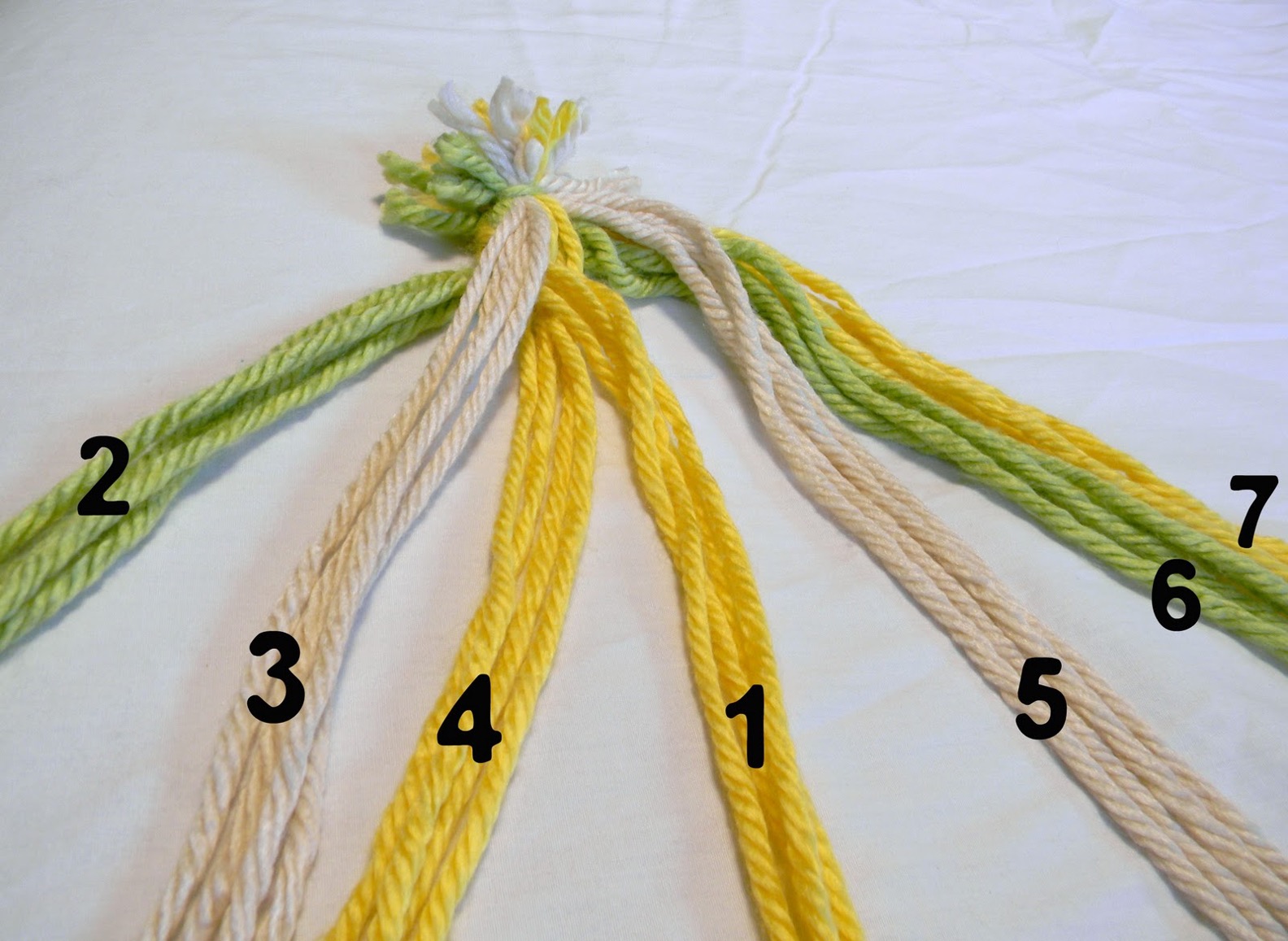
Does the wave function really model wavepackets – superpositional (‘braided’ [3]) excitations – or a more singular math representation? It’s the complex interweaving of frequencies in interactions – between wavepackets, whether in the ‘object’ of observation or the ‘observer’ itself and boundary conditions – that results in probabilistic trajectories. Something inherently uncertain – “quantum possibilities are in some sense present.”
As I wrote in Working Titles, “Quantum physics beyond remembrances – reframing quantum mechanics:”
Relational quantum physics is based on universal, ubiquitous superposition & entanglement. Our everyday world emerges from the interplay of superposition and entanglement within a multilayered superconducting Grid (Wilczek).
And, as noted below re the decades delay before any rethinking, my November 28, 2018 post comment cited what Philip Ball wrote then – also regarding Zeh: Philip Ball’s book [cited in his new article] explores how our understanding of quantum coherence/decoherence evolved only recently (quotes below).
Why it took so long for decoherence to appear as a core concept in quantum mechanics is not easy to say, given that the theoretical tools needed to understand it were around in Bohr’s and Einstein’s day. Perhaps this is simply another instance of how easy it is in this field to overlook the importance of what elsewhere we take for granted. For the crucial factor in understanding quantum decoherence is that ubiquitous entity present but largely ignored in all scientific studies: the surrounding environment. — Ball, Philip. Beyond Weird (p. 206). University of Chicago Press 2018. Kindle Edition.
One possible reason why it took so long for decoherence to be identified as the mechanism for turning a quantum system ‘classical’ is that the early quantum theorists couldn’t get past an intuition of locality: the idea that the properties of an object reside on that object. This is what entanglement undermines, and yet for many years after the EPR experiment had been proposed and debated there remained a presumption of neat separation between a quantum system and its environment, just as there is in classical physics. It wasn’t until the 1970s that the foundations of decoherence theory were laid by the German physicist H. Dieter Zeh. Even Zeh’s work was largely ignored until the 1980s, when the term ‘decoherence‘ was coined. — Ibid, p. 213.
As Ball notes, decoherence is incredibly fast. It’s beyond our imagination how fast such ‘de-braiding’ occurs. That’s to me a core aspect of fields and quanta – the interactive pace in friction-free space. (But not ignoring the momentum space of composite & confined ‘particles’ which introduces inertial contours into the Grid – hence ‘gravity.’)
I wonder if Zurek’s “multiple imprints on the environment” reflect the ‘braided’ character of wavepackets.
“Pointer states” are an interesting characterization, regarding interactions – encoding information in momentum space (particularly for confined composites).

I’d like to explore quantum ‘braiding‘ as a visualization for “the domain in which all possibilities still exist before decoherence.” As in the ‘quantum substrate‘ of the Grid.
And, as Ball notes, I’ve recently read articles about experiments which “find quantum behavior in objects big enough to be seen with an ordinary optical microscope.”
• Quanta Magazine > Are the Mysteries of Quantum Mechanics Beginning To Dissolve? by Philip Ball (February 13, 2026) – Can the phenomenon of decoherence finally bridge the quantum-classical divide?
[Quotes, my comments in brackets]
This is where Zurek’s work comes in. Starting in the 1970s, he and the physicist H. Dieter Zeh looked closely at what quantum theory itself tells us about measurements. (This might have happened much sooner if researchers had not been discouraged for decades from asking questions about these foundational but unresolved issues in the theory, on the grounds that it was all just pointless philosophy.)
In other words, Zurek and Zeh realized, entanglement is ubiquitous, and it is the information conduit between quantum and classical. … Zeh and Zurek showed that this entanglement “dilutes” the quantumness of the object because it becomes a shared property with the entangled environment, so that quantum effects quickly become unobservable in the object itself. [In this sense, the ‘quantumness’ – the braiding of excitations – is diffused, as the wave function is akin to a diffusion equation.] They call this process decoherence. For example, a superposition of the quantum object becomes spread out among all its environmental entanglements, so that to deduce the superposition we’d need to examine all the (rapidly multiplying) entangled entities. There’s no more hope of doing that than there is of reconstructing a blob of ink once it has dispersed in the ocean.
But measurement is not just about decoherence. It is entanglement with the environment that imprints information about the object on that environment — for example in a measuring device. For the past two decades or so, Zurek has been working out how that happens. It turns out that some quantum states have mathematical features that allow them to generate multiple imprints on the environment without being blurred into invisibility by decoherence. These states thus correspond to properties that “survive” into the observable, decohered classical world.
Zurek’s theory of quantum Darwinism … makes predictions that are now being tested experimentally. For example, it predicts that most of the information about the quantum system can be gleaned from just a very few imprints in the environment; the information content “saturates” quickly.
Notes
[1] While Ball does not use the term wavepacket in his article, the table of contents for Zurek’s book (see References) does contain the term:
Part I – Foundations
1 – Introduction
2 – Discrete Events from Repeatability: “Quantum Jumps” and Wavepacket Collapse
3 – Born’s Rule from the Symmetries of Entanglement
[2] Epiontic
AI Overview
“Epiontic” refers to a state of existence dependent on being known or observed, rather than existing as an independent, objective reality. Often used in quantum theory (as described by Wojciech Zurek), it describes entities that are physically real but not “ontic” (independently real objects) nor purely “epistemic” (mental constructs).
Key Aspects of Epiontic:
- Context: It describes quantum states that exist only when observed or confirmed, yet still behave as physical realities.
- Significance: It bridges the gap between epistemic (knowledge) and ontic (objective existence).
- Metaphysical Usage: It is also used in discussions regarding quantum consciousness and early Buddhist metaphysics to describe a “dependently originating” process.
Note: The term is often confused with epiotic (anatomical, related to the ear), epitonic (abnormally tense), or epibiotic (living on the surface of another organism), as shown in Merriam-Webster, Collins Dictionary, and Dictionary.com.
[3] ‘Braided,’ for lack of a better term as yet.

AI Overview
As a metaphor, braided describes the intricate interweaving of separate, distinct strands—such as ideas, storylines, or life experiences—into a single, unified, and stronger whole. It signifies complexity, interconnectedness, and the mingling of elements that remain distinct yet inseparable.
Key aspects of the “braided” metaphor:
- Intertwining Elements: It is often used to describe combining different concepts, such as braiding fact and fiction, or weaving multiple narratives into a single story.
- Structural Unity: A braided essay connects three or more distinct threads (e.g., interior experience and exterior facts) to create a complex, coherent narrative.
- Process and Complexity: It emphasizes that the resulting structure is stronger and more complex than the individual, separate strands.
- Flowing Together: Inspired by “braided streams,” it represents a system where separate channels continuously merge and divide.
Examples of usage:
- “He braided many different ideas into a new whole.”
- “It’s all those stories and how they braid together that tells us who, what and where we are.”
References
Book: Decoherence and Quantum Darwinism – From Quantum Foundations to Classical Reality by Wojciech Hubert Zurek, Los Alamos National Laboratory. Cambridge University Press. 06 March 2025. [List price $75, downloaded Kindle sample as yet.]
Quantum coherence in the news
• Seminar Day Promo > “Quantum Coherence as a Chemical Observable” by Caltech Alumni Relations
Ryan Hadt, Professor of Chemistry
Quantum Coherence as a Chemical Observable
References
• Argonne National Laboratory > What is quantum coherence? by Savannah Mitchem (FEBRUARY 19, 2025)
(Image by Argonne National Laboratory)